
Posted on November 05 2026


Vintage Watch Specialist · Blogs
Are Radium Watches Dangerous?
The luminous material applied to vintage watch dials helps us read the time in the dark. But is it dangerous?
Author: Alistair Newby
In this article
"Are they dangerous?" is a question many collectors ask about radium watches. Radium was first discovered by Marie and Pierre Curie in 1898, and, despite all the good Marie did for public health, she unfortunately introduced the world to an incredibly dangerous chemical.
Like asbestos and cigarettes, radium was initially used everywhere. It was even advertised as a health-giving cure-all, laced into toothpaste, face cream and even underpants. It was also mixed with zinc sulphide to produce luminous paint, which was applied to watch dials and hands to make them glow in the dark.
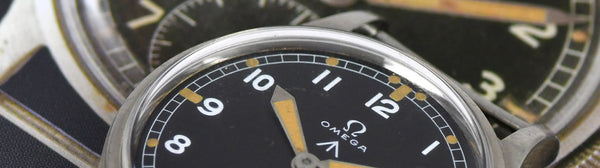
Today, original radium dials are highly sought after by collectors. But given the material's grim history, is it safe to wear a radium watch? And why would anyone want one in the first place?
The History Of Radium
Reports of radium’s disastrous effects began only two years after its discovery, with Henri Becquerel suffering severe skin burns from a small tube of it in his waistcoat pocket. Perhaps the most notorious case, however, was that of the ‘Radium Girls’.
Sadly not an obscure riot grrrl band, the Radium Girls were factory workers who suffered severe radiation poisoning and jaw necrosis ("radium jaw") after pointing their paintbrushes with their lips while applying radium-based paint to watch dials. The women had been assured that the substance was harmless, and some were even told it would improve their health and appearance.

When they fell ill, their complaints were largely dismissed, and a number were accused of having syphilis. Eventually, a few of the women received compensation, but only after long legal battles in which the defence delayed proceedings hoping they wouldn’t live to see a verdict. The strifes of misogyny and capitalism.
Despite the known dangers of radium, the watch industry continued using it for another four decades. This was partly driven by the belief that banning lip-pointing would solve the problem entirely, even though inhaling radium particles was just as deadly. Companies such as the United States Radium Corporation also suppressed medical reports and paid scientists to declare the substance safe to maintain their monopoly, all while their own executives handled it behind lead screens.
It was only by the early 1960s that radium began to be phased out. This was largely because a safer alternative had been discovered: tritium.
Many transitional watches, including the Rolex Submariner 5513, emerged during this period, identifiable by markings such as underlines, circled “T” symbols, “T<25” or “T Swiss Made T” on their dials.


These pieces now command a premium for their transitional status, but at the time, they were simply valued for being the first luminous wristwatches that were safe for both wearer and worker.
Are Radium Watches Safe To Wear?
Broadly speaking, the risk from wearing an intact radium wristwatch is very low, as long as sensible guidelines are followed. The condition of the watch, the state of its luminous paint, the length and nature of exposure, and how the watch is handled all matters.
Radium-226 has a half-life of approximately 1,600 years. In other words, the radioactive material in a vintage watch hasn't simply become harmless because the watch is old. Its glow may have faded as the zinc sulphide phosphor deteriorated, but the radium can remain radioactive for thousands of years. The US Nuclear Regulatory Commission explains radium's properties and historical uses.

The good news is, an intact crystal and case help prevent the luminous material from escaping, reducing the risk of inhaling or ingesting radioactive particles. However, they don’t block all the radiation emitted by the watch.
Radium produces alpha radiation and other radioactive decay products, including gamma-emitting descendants. Alpha particles are readily stopped by the outer layers of skin and by materials such as the watch crystal, but some of the other radiation can penetrate the case. The actual exposure depends on the watch and how it is used.
The most significant risk arises when the luminous paint has deteriorated, flakes off, or is disturbed during servicing. Inhaling or swallowing the radioactive particles will cause them to enter your body, mimic calcium, lodge into your bones and irradiate your tissue from the inside out. Nasty stuff.
What About Radon Gas?
Radium also decays into radon-222, a radioactive gas. This is worth understanding if you own several radium watches.
Radon can escape from a watch and accumulate in poorly ventilated spaces. That doesn't mean every watch box is a health hazard, nor does it mean every collector is exposed to dangerous concentrations. The number of watches, their radioactive content, the size of the room and the ventilation all make a difference.

The sensible approach is to avoid storing large numbers of radium watches together in a small, unventilated space. Keep collections in a well-ventilated area, and seek specialist radiation advice if you have a substantial collection or are concerned about radon levels.
How To Handle Radium Watches
If you own or are considering buying a radium-dial watch, there's no need to panic. There are, however, some sensible precautions worth following.
- Keep the watch intact. Don't open the case or remove the dial and hands yourself. A watch that appears perfectly sound from the outside may contain fragile, deteriorating luminous paint.
- Inspect the crystal and case. Cracks, missing glass, damaged case components or loose material warrant extra caution. An intact crystal helps contain the paint, although it doesn't eliminate external radiation.
- Don't polish a damaged crystal yourself. Avoid buffing, sanding or otherwise working on a crystal if you suspect the watch contains radium. Such work can disturb contamination, particularly if the dial or hands are already deteriorating.
- Treat damaged watches carefully. If the crystal breaks or you discover loose luminous material, avoid further handling. Don't brush, blow or vacuum away any debris. Keep the watch and any loose material undisturbed, restrict access to the area and seek advice from a qualified radiation-safety professional about safe containment and cleanup.
- Use an experienced watchmaker. Servicing a radium watch requires an understanding of the risks associated with radioactive paint. Vintage Watch Specialist can contract or defer you to one of our experienced watchmakers that regularly works with radium watches.
- Store collections sensibly. Avoid accumulating large numbers of radium watches in small, poorly ventilated spaces. Ensure they have adequate ventilation and take them out of any boxes/safes regularly.
- Don't attempt to re-lume a radium dial yourself. If the paint is flaking or crumbling, professional assessment is preferable to disturbing or removing it. Re-luming may be appropriate in some cases, but it involves a trade-off between preserving originality and reducing the risks associated with deteriorating material. One of our watchmakers can carry out radium re-lumes should you wish.
Importantly: don't assume a watch is safe simply because its lume no longer glows. The phosphor can deteriorate while the radium remains radioactive.
For additional guidance, the Canadian Nuclear Safety Commission's advice on radium luminous devices provides a useful overview of the risks associated with radium watches.
A Healthy Dose Of Caution
Ultimately, it's the dose that matters. We’re exposed to low doses of radiation all the time, from the ground, the air and even our food. High doses are where the problems arise, particularly when received all at once. It's why dentists run out of the room when you're getting an x-ray...
Not really.
A dental X-ray typically involves a very small radiation dose. The more relevant concern with radium watches is the possibility of prolonged exposure, radon accumulation in poorly ventilated spaces, or radioactive contamination entering the body.
The Irreplaceability of Radium Lume
With all that said, the key is to not be afraid of radium watches. Yes, the substance itself is dangerous, but most collectors are pretty relaxed about them. In fact, original radium dials are often desired over refinished or restored examples.
Grisly history aside, radium is part of the DNA of thousands of watches, and replacing or removing it somewhat undermines an example’s character and authenticity. It would be like restoring an antique painting by repainting the parts that have aged. Sometimes conservation is necessary, but originality has a value of its own.
The unique patina found on aged radium dials can also look remarkable.

This c.1940s Henri Blanc for example has a gorgeous two-tone chocolate dial, freckled with pumpkin patina that gives it rich depth and charm.

It tells a story. You can't recreate that in any other way. Additionally, many military watches had their radium swapped for tritium at service, so one found with its original lume is far rarer and more valuable.
Should You Buy a Radium Watch?
All in all, radium is not entirely bad by any stretch of the imagination - just be sensible.
For example, a few years ago, a paediatrician bought a radium watch from us. They chose not to wear it at work because they were concerned about exposing their patients to radiation. With the watch fully intact, they were aware the risks were near negligible, but it didn’t hurt to be careful. So enjoy your radium watches - but look after them. And now you know why and how.
If you have any questions about vintage watches or original radium lume, please contact us at javid@vintagewatchspecialist.com.
Disclaimer: We are watch dealers, not radiation-safety specialists. This article is based on our research and experience and is intended for general information only. It is not a substitute for professional radiation-safety, medical or conservation advice. If a watch is damaged, its luminous material is deteriorating, or you have concerns about exposure or storage, consult a qualified professional.
Vintage Watch Specialist
BLOGS

0 comments